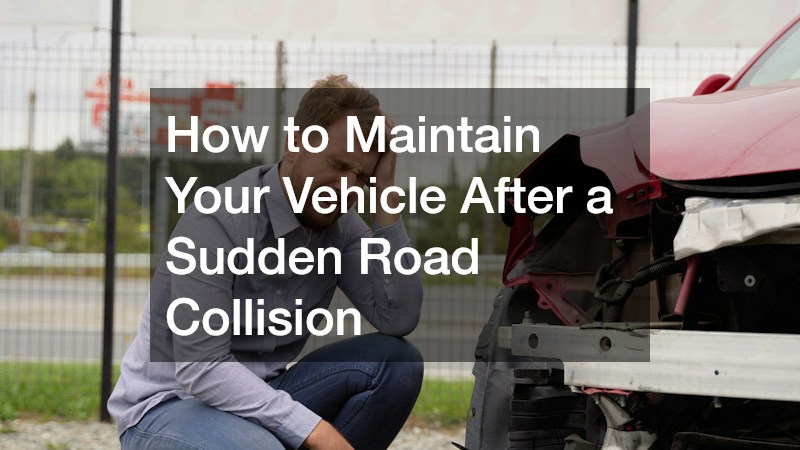
A vehicle collision is one of the most stressful experiences a driver can face. In the immediate aftermath, adrenaline surges, shock sets in, and the primary focus rightly centers on physical health and immediate safety. Once medical evaluations are complete and initial emergency protocols are settled, a new reality begins: dealing with the aftermath of severe vehicle damage. A road accident can compromise far more than just external metal panels; it can disrupt intricate mechanical networks, misalign internal structural frames, and weaken critical safety systems that keep you safe on the highway.
Properly maintaining and restoring your vehicle after an accident requires a methodical, step-by-step strategy. Simply fixing cosmetic dents and picking up the keys is rarely enough to guarantee long-term reliability. To ensure your automobile performs safely, retains its financial value, and remains dependable for years to come, you must take an active role in every stage of recovery. This comprehensive guide walks you through the entire process, covering emergency documentation, complex mechanical diagnostics, structural overhauls, and essential post-repair maintenance.
Phase 1: On-Scene Actions and Immediate Legal Steps
The decisions you make in the minutes and hours following a road collision lay the foundation for both your vehicle’s mechanical restoration and your financial recovery. Before any mechanical work begins, thorough documentation must take place directly at the scene. Taking high-resolution photographs and recording detailed video footage of all vehicles involved, road conditions, skid marks, traffic signals, and surrounding debris provides objective proof of the event. Capture tight close-ups of specific structural impacts alongside wide-angle shots that frame the overall context of the crash. Gather official driver credentials, contact numbers, insurance policy details, and the responding officer’s police report index number.
Navigating the financial fallout of a crash involves handling complex claims processes, evaluating insurance adjustments, and determining liability. When another driver’s negligence causes severe property loss or physical harm, securing fair compensation for high-end replacement parts and structural repairs can turn into an uphill battle. In these complicated scenarios, partnering with a qualified car accident lawyer can protect your legal interests, manage aggressive insurance adjusters, and ensure that your claim reflects the true cost of mechanical restoration rather than a rushed, lowball settlement.
Once the initial legal and safety measures are handled, the focus shifts to removing your vehicle from the roadway without causing further harm to its underlying mechanics. If you suspect frame misalignment, leaking vital fluids, or suspension damage, never attempt to drive the car away. Operating a compromised vehicle can twist suspension components or cause internal engine seizure. Instead, arrange for a flatbed tow truck to transport the vehicle directly to a secure evaluation facility, preventing additional stress on damaged structural assemblies.
Phase 2: Professional Diagnostic and Towing Logistics
After your vehicle arrives at a repair site, choosing the right facility determines the quality of your car’s recovery. Vehicle owners must decide between an independent collision workshop, an insurance-preferred body shop, or the service department at their original local auto dealer. Facilities affiliated with original equipment manufacturers often possess factory-trained technicians, specialized diagnostic tools, and direct access to original manufacturer replacement components. This access is crucial for vehicles equipped with complex computer modules and modern safety technology.
Modern automobiles act as rolling computers, containing dozens of interconnected control units. Even a minor bump can dislodge delicate electronic sensors or disrupt internal network communications. A complete diagnostic overhaul requires comprehensive On-Board Diagnostics (OBD-II) scanning to read fault codes within the supplemental restraint system (SRS), anti-lock braking network, and automated driver-assist suites. Beyond software diagnostics, technicians must mount the vehicle onto a computerized laser frame-measuring rack. This equipment measures the unibody structure against factory tolerances down to the millimeter, revealing hidden structural shifts that could ruin tire alignment or weaken crash-energy absorption zones.
Once diagnostic reports are generated, review them side-by-side with your insurance adjuster’s initial estimate. Insurance companies often draft estimates based on visual surface damage, routinely underestimating the scope of internal repairs. Compare the facility’s detailed tear-down assessment against the insurer’s allowance, ensuring that every damaged bracket, sensor wire, clip, and fluid line is accounted for before work begins.
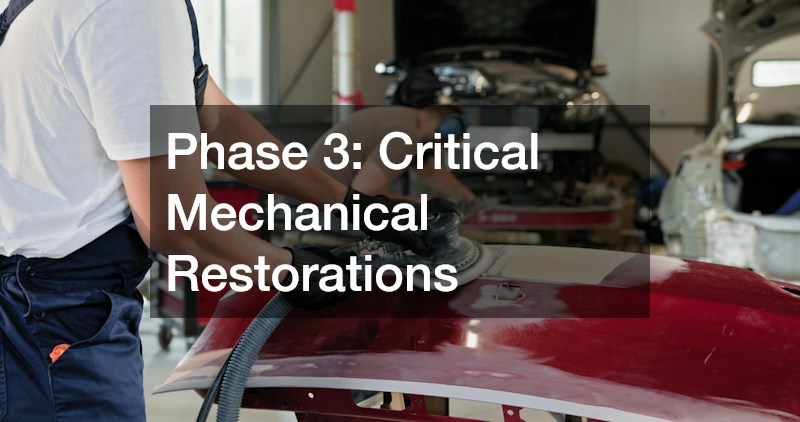
Phase 3: Critical Mechanical Restorations
The sudden deceleration forces involved in a crash place tremendous stress on hydraulic, mechanical, and friction-based stopping systems. Even if your brakes seem to function immediately after an accident, the extreme forces can warp rotors, fracture caliper mountings, or create micro-tears in flexible hydraulic hoses. Securing thorough auto brake services guarantees that the hydraulic fluid line is completely flushed of air pockets, contaminated fluid is replaced, and electronic anti-lock sensors are recalibrated to perform under emergency stopping conditions.
Ignoring subtle braking issues after an impact introduces extreme risk to your everyday driving. Internal seal failures inside a master cylinder or slight shifts in caliper placement can lead to uneven pad wear, fluid pressure drops, or complete pedal failure. Investing in targeted brake repair remedies these vulnerabilities by replacing damaged friction materials, smoothing warped rotor surfaces, and restoring factory pedal feedback.
-
Fluid Line Integrity: Hydraulic brake lines run along the undercarriage and can pinch, crack, or leak when struck by road debris or bent frame components during a crash.
-
Caliper and Rotor Alignment: High-energy impacts can push brake calipers out of alignment, causing pads to drag constantly against the rotor and leading to severe heat buildup.
-
ABS Sensor Calibration: Wheel speed sensors mounted near the hubs can shift during an impact, sending incorrect data to the traction control computer.
-
Drivetrain Shock Absorption: Sudden stops while the car is in gear send severe kinetic energy backward through the driveshaft, axles, and internal gearbox components.
The drivetrain bears a heavy burden during sudden collisions, especially if the vehicle was in motion or hit while stationary with the park pawl engaged. The severe kinetic shock can fracture gear teeth, crack aluminum housings, or rupture external cooling lines. Addressing shifting delays, slipping gears, fluid leaks, or strange grinding sounds requires complete transmission repairs. Technicians must inspect torque converters, internal clutches, and electronic control solenoids to ensure power flows smoothly from the engine to the drive wheels without unexpected slipping or overheating.
Phase 4: Structural and Glass Safety Repairs
Modern auto glass does much more than block wind and rain; it acts as a structural safety feature of the vehicle’s cabin. The front windshield supplies up to 45 percent of the structural cabin strength in a rollover accident and acts as the backstop for passenger-side airbag deployment. A hairline crack or small bullseye chip caused by collision impact severely compromises this structural integrity. Hiring a certified auto glass replacement service ensures that cracked pane units are removed using proper techniques, the mounting pinch weld is cleared of rust and old adhesive, and high-strength polyurethane adhesives are applied to seal the new glass securely to the body.
Modern vehicles equipped with Advanced Driver Assistance Systems (ADAS) often house forward-facing cameras, radar units, and rain sensors directly behind the upper portion of the front windshield. When glass replacement occurs, these optical and electronic sensors must be recalibrated with pinpoint accuracy using specialized optical targets. A misaligned camera offset by just one degree can miscalculate stopping distances for automated emergency braking or misread lane boundaries on the highway.
Comprehensive mechanical restoration also requires addressing deep chassis components hidden beneath the bodywork. Steering racks, tie rod ends, control arm bushings, strut towers, and sway bars frequently absorb heavy side-impact forces during a crash. Connecting with skilled mechanics for general local auto repairs ensures that damaged suspension geometry is corrected, bent steering linkages are replaced, and wheel hubs are brought back within original alignment specs. Correcting these mechanical issues prevents uneven tire wear and keeps the vehicle tracking straight down the road.
Phase 5: Aesthetic Restoration and Frame Refinishing
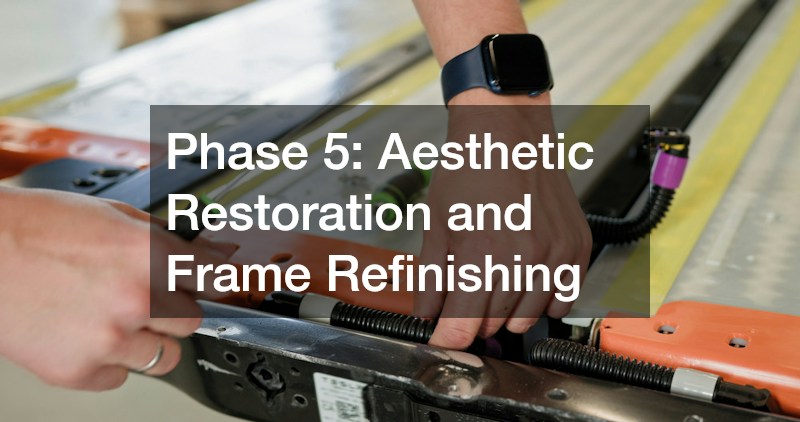
Once the underlying mechanical and structural systems are fully restored, attention turns to repairing the outer shell and body panels. Modern collision centers utilize advanced bodywork techniques depending on the severity of the metal deformation:
-
Paintless Dent Repair (PDR): Used for shallow dents where the factory paint remains flexible and intact, using specialized tools to massage the metal back to its original form from behind the panel.
-
Traditional Metal and Filler Work: Applied when metal panels are creased, requiring careful reshaping, sanding, filling, and priming to restore smooth contours.
-
Panel Replacement: Used when structural composite or sheet metal panels are stretched beyond repair, requiring complete replacement with new OEM components.
-
Laser-Guided Panel Alignment: Adjusting door hinges, fender mounts, and hood latches so that all exterior panel gaps match factory spacing down to the millimeter.
Impacts that break through the top clear coat, base paint, and protective primer expose bare metal to ambient humidity, setting off rapid oxidation. Leaving gouged metal untreated leads to spreading rust that undermines body panels over time. Professional technicians address deep surface gouges through comprehensive car repair, carefully sanding away damaged paint layers, applying corrosion-resistant primers, and layering computerized color-matched paint over the affected area.
A detail-oriented refinishing process does far more than make the car look nice—it seals the metal from moisture, road salts, and chemical pollutants. Repairing paint gouges through precise cosmetic scar repair preserves the structural metal underneath, locks out environmental elements, and preserves the resale value of your automobile.
Phase 6: Post-Repair Quality Checks and Road Testing
Collecting your vehicle from the repair center is a critical moment that requires thorough verification, not a rushed handoff. Before signing liability releases or final insurance sign-offs, inspect the car inside and out in bright, direct daylight. Examine panel gaps to confirm they are uniform across all body seams. Inspect the paintwork from multiple angles to check for color matching, orange peel texture, overspray on rubber weatherstripping, or dust nibs trapped under the clear coat. Test every electronic feature inside the cabin, including power windows, seat adjustment controls, air conditioning systems, infotainment screens, and external lighting arrays.
Even when initial road tests seem successful, severe impacts can create micro-stresses that take several hundred miles of driving to reveal themselves. Scheduling a follow-up inspection for general auto repair after driving 500 miles gives technicians a chance to re-torque wheel lug nuts, re-check fluid levels, inspect suspension bushings, and verify that no hidden fluid leaks have developed under operational pressure.
Phase 7: Long-Term Maintenance and Detail Care
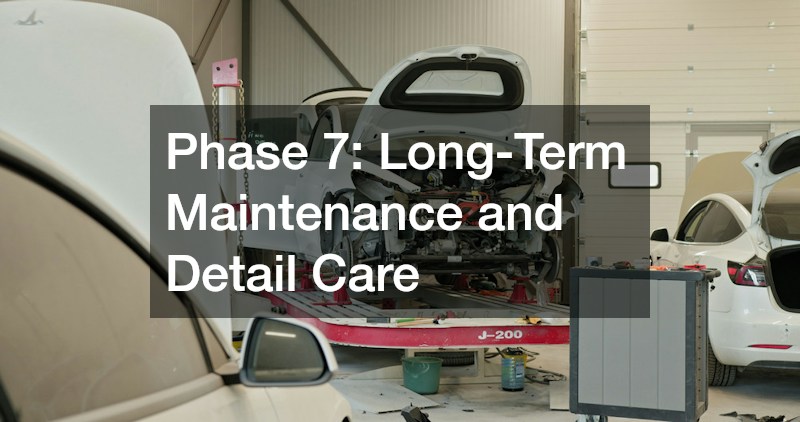
Maintaining a vehicle after a collision requires an ongoing commitment to preventative care. Modern body shop paint finishes require careful handling during their cure period, which typically lasts between 30 and 90 days depending on ambient temperatures and clear coat formulations. Avoid automated drive-through car washes during this initial window, as harsh stiff brushes and recycled water laden with fine grit can scratch fresh clear coats.
Building a personal vehicle care kit with high-quality auto care supplies allows you to maintain the finish safely at home. Use pH-neutral car wash soaps, ultra-soft microfiber wash mitts, and dedicated two-bucket wash setups to clean away dirt, bird droppings, and tree sap without micro-marring the delicate new paint. After the curing window closes, applying a high-grade ceramic coating or synthetic paint sealant adds a durable barrier against UV radiation, road chemicals, and atmospheric oxidation.
Establishing an ongoing relationship with a qualified technician for regular local auto repairs helps you stay ahead of potential long-term issues. Technicians who routinely service your vehicle can spot early signs of wear, evaluate stress points near old repair sites, and adjust maintenance schedules as your car ages. By combining meticulous post-collision repairs with diligent long-term upkeep, you can keep your restored vehicle safe, reliable, and smooth-running for years to come.
Using This Guide After a Car Accident
Recovering from a major road accident demands patience, clear organization, and a systematic approach to vehicle maintenance. Restoring an automobile to its pre-accident condition involves far more than simply smoothing out bent body panels and applying a fresh coat of paint. By prioritizing complete electronic diagnostics, addressing hidden mechanical strain, using factory-quality replacement parts, and sticking to an ongoing post-collision maintenance routine, you can safely navigate the repair process with confidence. Taking these essential steps protects your financial investment, preserves your vehicle’s resale value, and ensures that your car remains a safe, dependable form of transportation for you and your family.